Inside a Rootkit: Dudcom's Intro to Malware Reverse Engineering
Tonight's Malware Analysis Webinar went all the way from x86 registers to pulling apart a real rootkit, live in IDA.
By Edward Z.3 min read
Title slide reading Cyberstudents Intro to Malware Rev, by Dudcom at SPL
Tonight, members gathered in our Conference Room for the Malware Analysis Webinar, a talk you asked for in one of our polls and part of this year’s InfoSec Growth Sessions. Our speaker was Dudcom, a reverse engineer who works at Trail of Bits and plays CTFs with Squid Proxy Lovers, and the webinar was a tour of malware reverse engineering that started from the very basics and finished with a real rootkit sample, taken apart live.
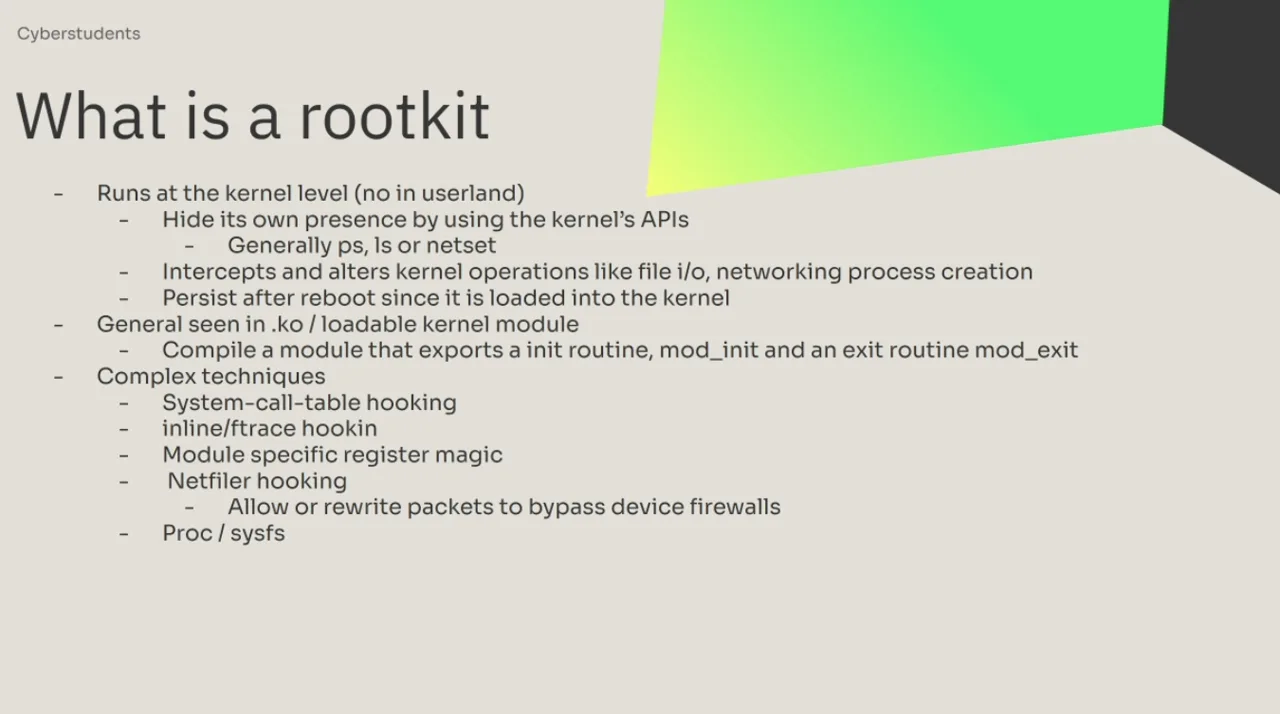
What is a rootkit, anyway?
Dudcom began with the big question. A rootkit is malware that runs at the kernel level, hides its own presence from everyday tools like ps and netstat, and quietly intercepts what the kernel is doing. On Linux, that often means a loadable kernel module that hooks the system call table, or one that leans on features like ftrace and netfilter to stay out of sight.
Building up from the basics
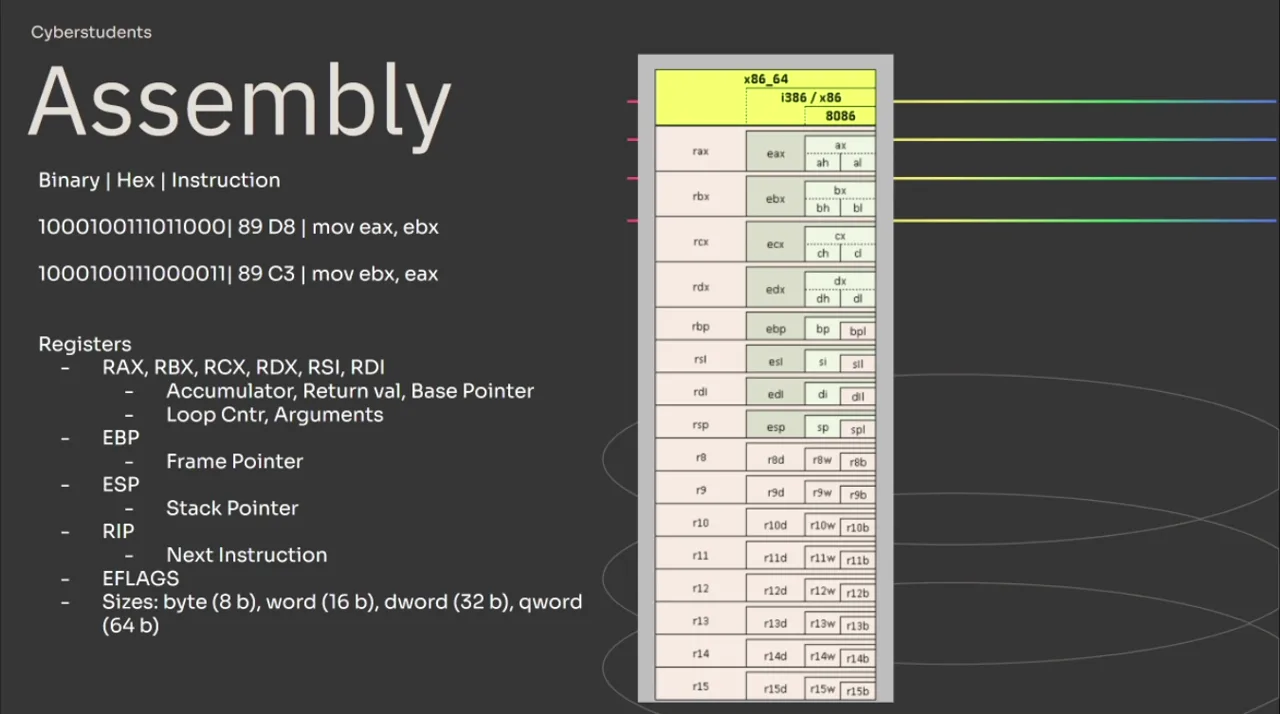
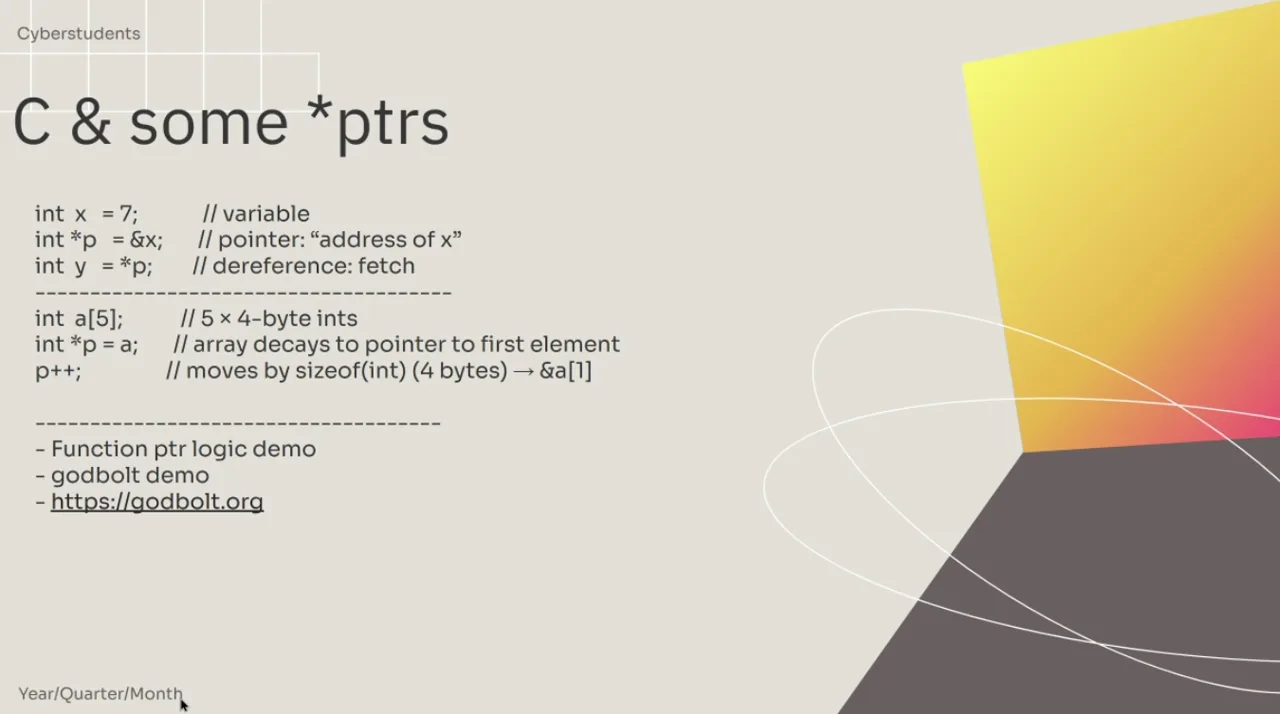
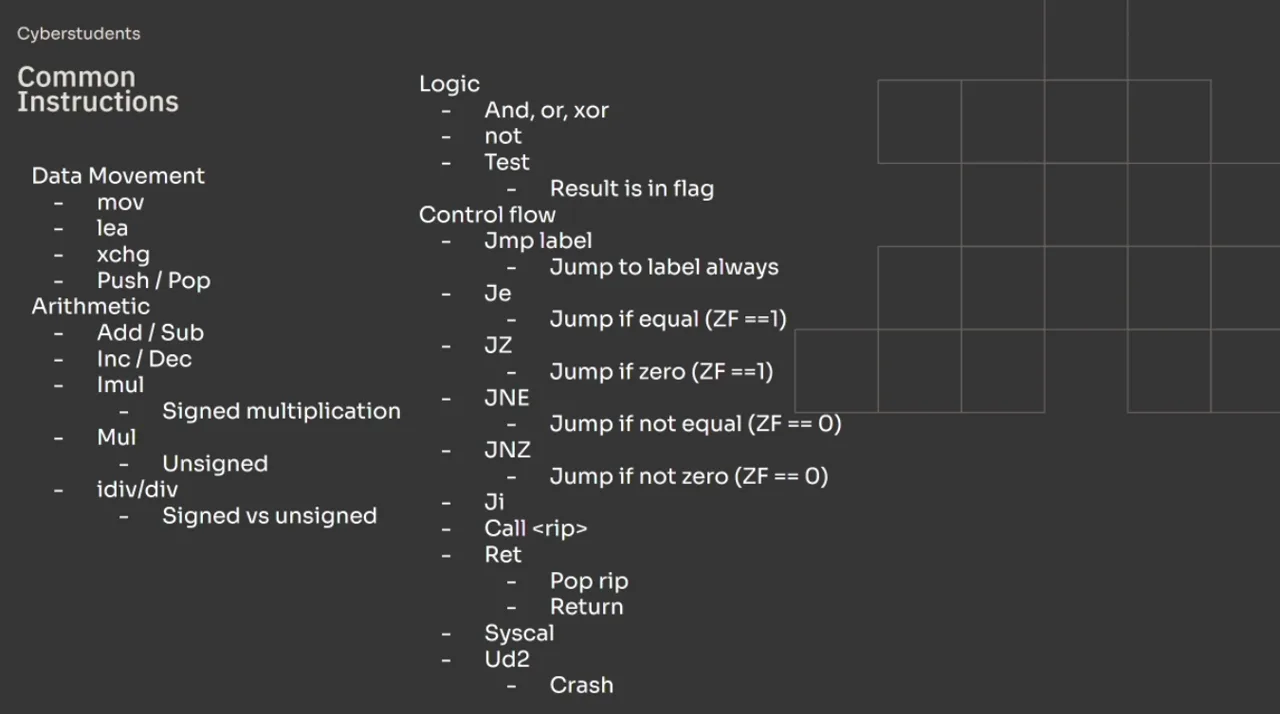
From there, the talk stepped back to cover everything you’d need to follow along: how a line of binary maps to an assembly instruction, what registers like RAX, ESP, and RIP are for, the x86 instructions that come up most often, and a refresher on C pointers and the standard library functions that show up in malware again and again. If you’ve ever stared at a disassembler and felt lost, this part was for you.
Reversing it live
The highlight was watching all of that come together. Dudcom opened a rootkit sample in IDA and walked through it function by function, showing how each block of assembly mapped back to what the malware was actually trying to do.
Thank you so much, Dudcom, for such a fun and detailed session, and thank you to our community managers for putting it together! Our InfoSec Growth Sessions carry on every Friday, so bring your goals and your questions.